Though I missed Callon, but met him anyway
My week of reading Callon led me to make many connections with questions I had been thinking about regarding paper mills, and even broader academic publishing.

In the last post, I wrote about how I couldn’t make it to the tribute workshop for Michel Callon and instead had my own deep reading week. Now I’m trying to pull out what I learned from it, to ease the regret. Maybe it’s nice to start with how I got to know his name, which might not be so different from how others encountered him (if they did), but is still memorable and worth mentioning.
In South Korea, where I’m originally from, Callon is somewhat known as an ANT scholar who worked with Latour. In my experience, recognition mostly stops there, while Latour became a star intellectual, with many of his books and articles translated into Korean. ANT also became quite popular, but often got simplified into the proposition that “non-humans can also be actors,” more than anything else. I guess the “theory” in its name contributed to its gaining a foothold (maybe this is not only in Korea though).
The graduate school where I did my Master’s, STP (Science and Technology Policy), consisted of two cultures, namely policy studies and STS. I wasn’t really into STS at the moment, but that barely caused me any trouble under my advisor, a scholar of international comparative politics on the policy side. I also leaned toward policy, studying higher education policy and writing a thesis on university–industry cooperation to orient myself within so-called innovation studies. Still, the mandatory STS courses made me imagine crossing and linking these two cultures.
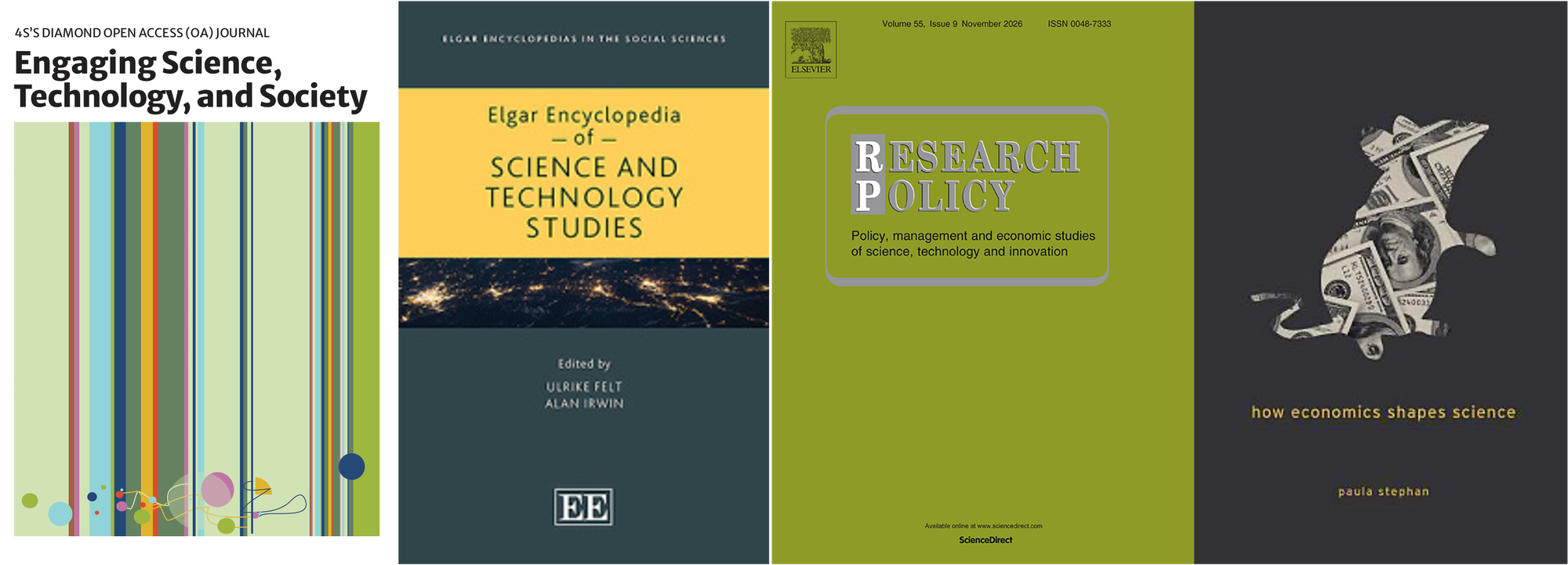
And somehow I found Callon, who seemed to be doing so, most notably by serving as an editor of Research Policy for 20 years, a journal I admired a lot. I should confess that I was really obsessed with the journal because of its name, its impact factor, and its (seeming) uniqueness. Even my initial interest in research misconduct, questionable research practices, and evaluation metric gaming might have come from its occasional publications on these topics. At least, finding them there reassured me that my interests were legitimate.
In addition, STP was somewhat divided between qualitative and quantitative methodologies along the same fault lines (a tendency sadly I also notice at CWTS and across science studies). I was again ambitious about integrating them and tried a bit (and will do so for my PhD). Finding that Callon was also a pioneer of co-word analysis, which opened up new directions for scientometrics and quantitative science studies, was inspiring to me in that sense.
However, by the time I left academia with my Master’s degree, that was it. I had perhaps read some of his classic pieces, but with only a superficial understanding or even just some impressions without much understanding at all.
Revisiting Callon
7 years had passed from then. When Callon passed away, I was busy wrapping things up in South Korea and preparing to move to the Netherlands for my PhD, having received the interview result from Wolfgang (my supervisor at CWTS) and accepted the offer after discussing it with my family. I might have heard the news through social media or somewhere else at the time, but I only really learned it later that year. That probably shows how little attention I was paying to him, or how little relevance I saw in his work for my research.
Then how did I really get into Callon? Looking back, I think there were two distinct but connected pathways through which I became a student of his work. I can't really tell which came first, so I tried to arrange them so they can be read in any order.
Pathway from building a reading list
Starting my PhD, my aim for the first year was to read as much as I could and build my own bibliography (at least its core), which I could revisit throughout my PhD journey. That changed as time went by. I began to think of it more as navigating the landscape of academic publishing and understanding the context of my research topic: to avoid becoming too narrow, but also to know better where to draw the line and stop expanding (though I’m not really good at the latter). Now I’m trying to admit that I failed to read as much as I wanted (can anyone succeed at that these days?), but still built a good list of literature to refer to while doing empirical work. I justify this to myself by saying that reading never gets finished, so it’s better to blend it with doing research than to make it a precondition for my PhD.
Maybe the reason I shifted from reading to travelling (both literally and figuratively) was that I didn’t find the classics quite engaging enough, especially when reading them just to learn the disciplines. Still, the interview series in Engaging Science, Technology, and Society was an enjoyable read, much more so than much of the other literature, and led me to follow up on the references. Another helpful resource for studying STS was a recently published Encyclopedia of STS, which I also enjoyed, mostly because of its relatively short chapters focused on introducing themes. Soon I noticed two things: I hadn’t found an interview with Callon in the ESTS series, while his work (especially the scallop paper) seemed to appear as a core reading in almost every chapter of the encyclopedia.
No, I didn’t read the paper right away. Actually, I only read it just before writing this post, and I have mixed feelings about it. What I did then was search for an interview with him. I found one that was quite a gem, I’d say. Although it didn’t directly discuss his editorship, the conversation helped me understand how someone like Callon could have become and longly remained an editor of Research Policy.
He discussed how Mertonian sociology of science and mainstream economics of science shared assumptions about science while leaving its actual epistemic content and practices from empirical analyses and examinations. I should also note that Paula Stephan’s How Economics Shapes Science had been a go-to book during my Master’s. And I still see a close connection between the Mertonian tradition and scientometrics and quantitative science studies. His account put a finger on something that had been bothering me: why I had lost interest in these approaches while still sharing many of their research interests. (But I should also mention Callon has observed that Merton himself had recognized the limitations of this approach and was more receptive to studies of scientific practices than some of his followers.)
Reading this alongside the introductory chapters, I soon realized that it connected with my own struggles to understand why academia, at least in Korea, had changed so little after the surge of predatory publishing (which became known in Korean as “substandard scholarly/academic activities"). After engaging with these issues (I think I need another post for this though, speaking of my own 'sleuthing' experience), I had reached the point of questioning quantitative research assessment that outsourced its evaluative criteria to metrics and indicators. I had also started looking into valuation studies, which seemed to have something to say about what actually happens when people evaluate the epistemic quality of research.
I had only picked up this strand of thought at a surface level when applying for the PhD position. Now I was beginning to recognize connections between the vocabulary I had been using— from performativity, devices, arrangements and assemblages, to assetization—that they mostly came from, at least heavily rely on, the works of Callon, his collaborators, and scholars building on them. I had been using these terms without really understanding the conversations they originated. A shame but better late than never.
Pathway from observations around paper mills
I've spoken in public several times (even there's a video recording) about how I got interested in paper mills. The topic was given to me rather than formulated by myself, but I still chose to apply because it resonated with my own interests. One question I keep carrying is: to what extent are paper mills different from other research misconduct or questionable publishing practices? I had already seen predatory publishing up close, and I needed a reason to justify spending a whole PhD on this one, so some differentiation seemed necessary. My answer so far is that there is no single feature that is both necessary and sufficient to distinguish them.
Still, if I have to pick the feature that matters most to me, it's authorship-for-sale at scale. Selling authorship isn't new, but doing it as an organized business is what made a black market of academic publishing. It is a clear violation of publication ethics, and it's easy (and fair) to label paper mills as the bad guys. But it doesn't explain how their business became possible, nor what would make it stop working.
This is where Callon became useful to me, not as a theory to apply but as a way to ask a different question. Markets in the Making is a compendium of his thoughts on market studies, and a good part of it is about how markets are made and continuously remade: how goods are prepared to be traded, how participants are equipped to (e)valuate them, and how transactions become possible. Goods have to be detached from those who made them, framed to behave predictably, and attributed to someone entitled to transfer them.
Authorship appears among his examples too, when he contrasts how scientific discovery and invention are treated regarding property rights. His point is that this distinction made sense in the past but has become hard to sustain in technoscientific fields (p.98-101). Reading this, I thought paper mills push the same point from another direction. Authorship is supposed to stay attached to the person who did the work. But if who gets credited is a convention to begin with, it can be detached from the manuscript and made transferable for money. (And with AI-generated manuscripts, it's not even clear what there would be to attach to.) So they are not just breaking a rule, they are making a market.
Paper mills could do this only because the legitimate market had already made publication into a kind of currency. So we should ask: how does authorship become something that can be offered, priced, and transferred to a buyer? And what must happen for that purchased authorship to count within academic evaluation? We all share some responsibility here, yet while people recognize that collective action is necessary and take steps to combat paper mills, they are also busy blaming each other. More often than not, the blame lands on commercial actors, namely publishers. This brings me to another question I always keep in mind: why would publishers care about this at all? It may come from my positionality regarding the PhD project, but it is also something I've been asking even before then.
To be honest, I've become quite dissatisfied with "commercialization" being used as an explanation for what went wrong. It's a low hanging and easy argument to reach for, and yet powerful one in a society where so many things are being commercialized. The argument goes like: something we value seems to be deteriorating, commercial actors are involved, so commercialization must be the reason. I understand the appeal, and I used this narrative quite freely during my Master's. But toward the end of writing my thesis, I got tired of how often the conversation stopped there. From graduate students' rights to predatory publishing, the seniors who sympathized with my problems tended to direct them toward something so big and far away like neoliberalism that it felt useless for what we could actually investigate or change.
My dissatisfaction was not only that this seemed unhelpful for dealing with existing problems. I also doubted whether it was accurate, or at least precise enough. What exactly is changed through commercialization? By whom, through which arrangements, and with what consequences? These questions tend to disappear once commercialization has been named as the problem.
Then I found the term "marketization" in Callon's work. It doesn't necessarily moralize the market or commercialization. It tries to show how markets have been made and are constantly being made, and Callon insists on separating "market" from "capitalism," which the story that blames commercialization usually conflates. This is much more demanding, but it gives a more solid empirical ground for what is actually happening beyond "commercial actors ruin the subject." It also changes how I read ruining and extracting. What commercial actors leave out is not simply destroyed. It is what falls outside a particular framing, and for Callon it comes back as overflow, as concern and critique that feed the next round of market-making. Which makes me wonder whether commercial actors could also be allies, a question I'll come back to below.
Then, am I being uncritical about the commercialization of science? I should disclose more clearly that one of the biggest commercial publishers has made my PhD position possible, and it might have somewhat influenced the problematization above. But to be honest, it's more complicated than that. The first question, if not research question, I had since the start of my PhD was "why do publishers care about research integrity, and are they actually caring?" Partly because of where the research funding of mine comes from, but also because I see initiatives elsewhere in publishing where commercial actors are investing, though the amount and sincerity are arguable. Their existence is nevertheless something I want to understand.
I think criticism of academic publishers needs to go further than pointing out how much money they make from science. And I AM concerned about the race to commercialize research integrity, but not quite because it is commercial. To put it somewhat radically, I might not be bothered much about parts of scholarly communication being commercialized as such. What concerns me is the consequences: it changes the valuation regime in scholarly communication, which affects epistemology by influencing how science is done and disseminated. When an integrity intervention has to fit a commercial service or an existing business model, the solution space for the current problem is constrained to what is compatible with it, often beyond the researcher communities' control and sometimes heading in the opposite direction from what they want. But I'd like to treat this as an empirical question and follow up on how it comes to be so. Which problems receive attention? What can be recognized and acted upon through the tools being developed? Who decides what counts as a sufficient solution?
Nor do I think that invoking "publish or perish" or the current research assessment settles the explanation, though that doesn't mean they should go unblamed. How we got to the point where everyone says there is a crisis of peer review, research integrity, or trust in science (you name it) is not so hard to explain even without an economic model: scale has been benefiting both sides, so they just proceeded until now. I want to go further than saying researchers respond to incentives and publishers pursue revenue. What I'd like to understand is how the current situation is problematized by different actors with different interests, and how those interests become connected leading to some attempts toward solutions.
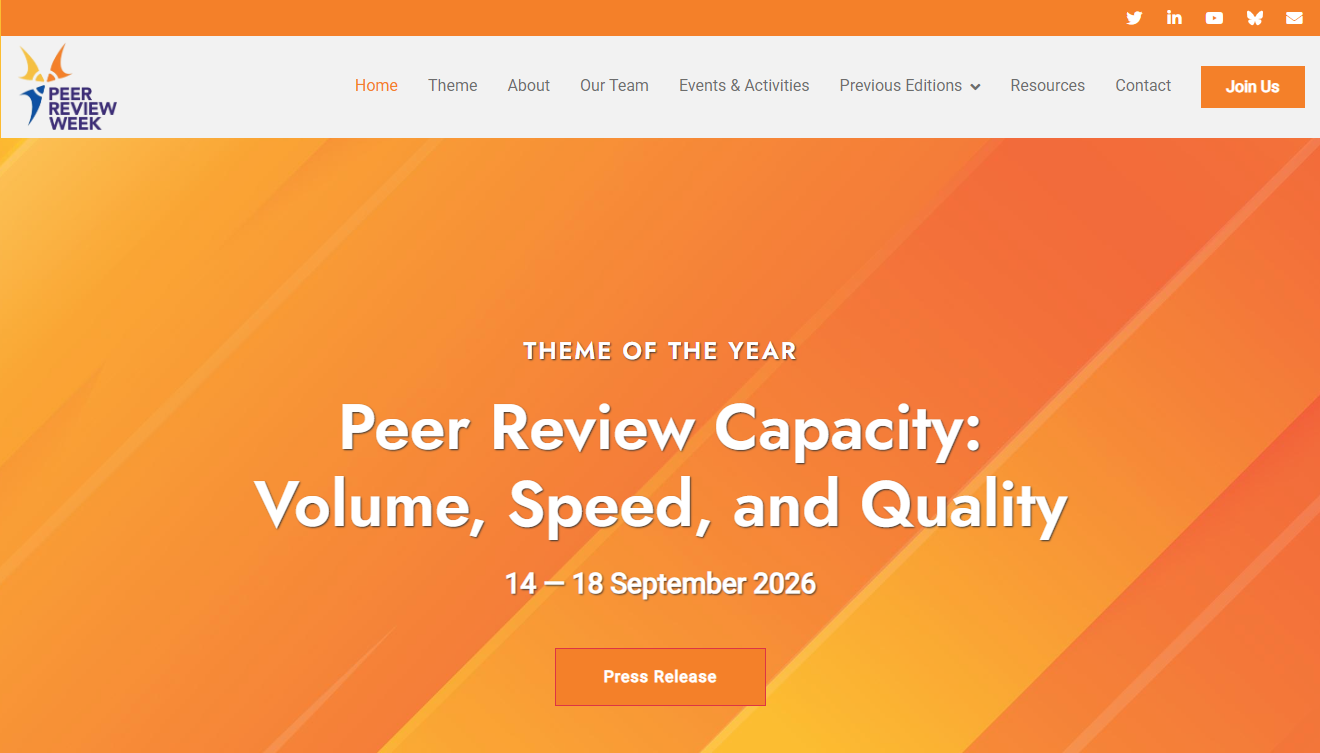
A small observation from this September shows what I mean here. Peer Review Week 2026 had the theme "Peer Review Capacity: Volume, Speed, and Quality," and organized by a steering committee of more than 50 industry organizations and societies. The theme, as the keywords show, was about how to scale peer review as a well-oiled system, and peer review here reads to me as a process of producing publication goods that is running short of capacity. And from what I saw, most events were hosted by and invited speakers from commercial actors, not by the "peers" who actually review. (But wait, you never know, vendor might recruit paid peer reviewers and they could have been there.)
This brings me back to the question from my reading notes, maybe the most radical one: can commercial actors become allies in changing these arrangements? There will surely be conflicts and frictions, and their interests will not always align with researchers. But I don't want to rule it out in advance. Reading Callon has made me more interested in what such cooperation would require, and what it could actually change.

So now what?
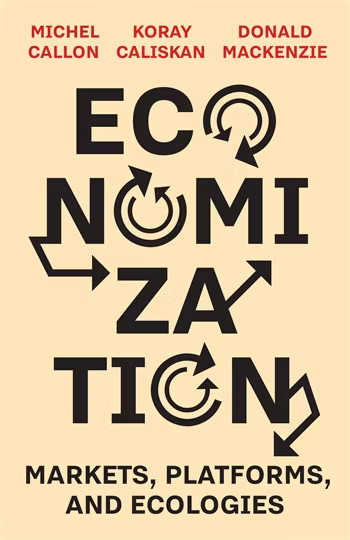
Either way, I’ve quite enjoyed reading Callon’s work so far. He has left plenty to read, and there is even another book co-authored with Koray Çalışkan and Donald MacKenzie on the way coming early next year: Economization. Some of these works will definitely find a lasting place in my bibliography (and some will probably remain unread realistically, unless my PhD somehow becomes entirely about him).
What I’m picking up is his way of approaching markets and their infrastructures as always in the making—being designed, experimented with, fine-tuned, and (re)assembled. I’m also putting his language and vocabulary (or jargon)—passiva(c)tion, qualculation, framing, overflow—into my head, but trying not to make everything I observe into an example of a concept I’ve just learned. I still hesitate about following the broader scope of economization and ecologization which I didn't fully understand (and also read much about), so I’m not yet sure how far I need to follow it for my own research.
By doing so, I’d like to take further the popular metaphors about publications, especially their being a currency in academia, where research assessment relies heavily on journal publications and the culture of “publish or perish” becomes self-fulfilling. This longstanding folk theory fits the phenomenon of paper mills so well. Not to mention academic publishing itself, meanwhile, has long been a commercial business. Even well-intentioned open access initiatives have been taken up through business models based on APC (i.e. Gold OA), shifting payment from reading to publishing.
Our efforts to combat paper mills, now also flooded with all things AI, will contribute to making new market agencements, to borrow Callon’s term. Here, research integrity works as an imperative that brings together diverse actors around academic publishing. But how they frame it differs, and their responses have to fit established infrastructures and political economic arrangements, mostly those already in place. These responses also produce overflows, leaving further concerns to be contested through other experiments.
Publications, considered as goods within my current framework with reading Callon, may retain their formal conventions while their meaning keeps changing, as their markets are themselves always in the making. Scholarly communication will change along with them, though perhaps more slowly than we predict these days because of our sticky sociotechnical associations, alliances, assemblages, or agencements (I know they are not interchangeable, but now you get why I get tired of jargons). My PhD will trace this transformation without simply buying the narrative of a response to an external crisis of destruction, such as paper mills and AI, or of disruptive innovation from within, such as forensic techniques and, again, AI.
Indeed, it has been quite a satisfying time, full of inspiration from Michel Callon, and also from his co-authors and students. I now think I can go to Paris this winter with less regret and enjoy some sightseeing in peace.

